


What Is Evergreen Private Equity—And Why Does It Matter?
The private equity landscape is evolving. Gone are the days when investors had to wait a decade or more to see returns from traditional closed-end funds. Enter Evergreen Private Equity—a flexible, liquid, and continuously invested approach to private markets that has gained significant traction in recent years.
But not all evergreen strategies are created equal. As the number of evergreen vehicles grows, so does the complexity of choosing the right one. At the heart of this decision lies a critical choice: Single-Manager vs. Multi-Manager strategies.
In this post, we’ll break down the key differences, benefits, and considerations—so you can make an informed decision aligned with your investment goals.
Key Takeaways at a Glance
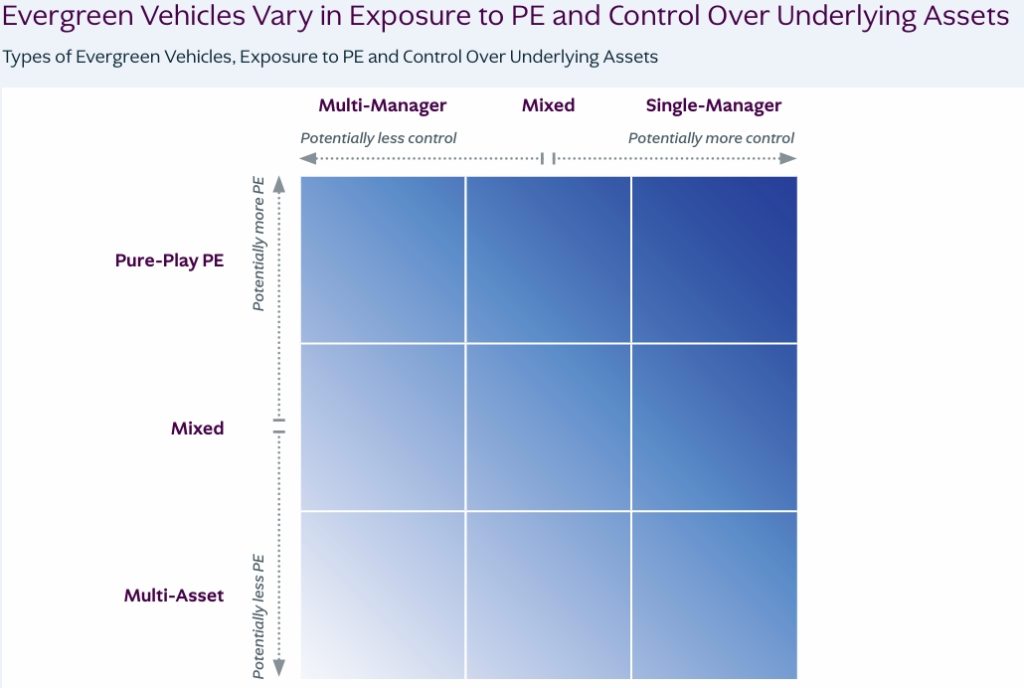
- Evergreen private equity vehicles vary widely—from pure-play PE exposure to multi-asset strategies.
- Single-manager strategies invest directly in deals sourced and managed by one firm.
- Multi-manager strategies pool investments across multiple third-party funds and co-investments.
- Control, transparency, fees, and diversification differ significantly between the two.
- Choosing the right structure depends on your goals: direct control vs. broad diversification.
Single-Manager vs. Multi-Manager: A Clear Comparison
What Is a Single-Manager Evergreen Strategy?
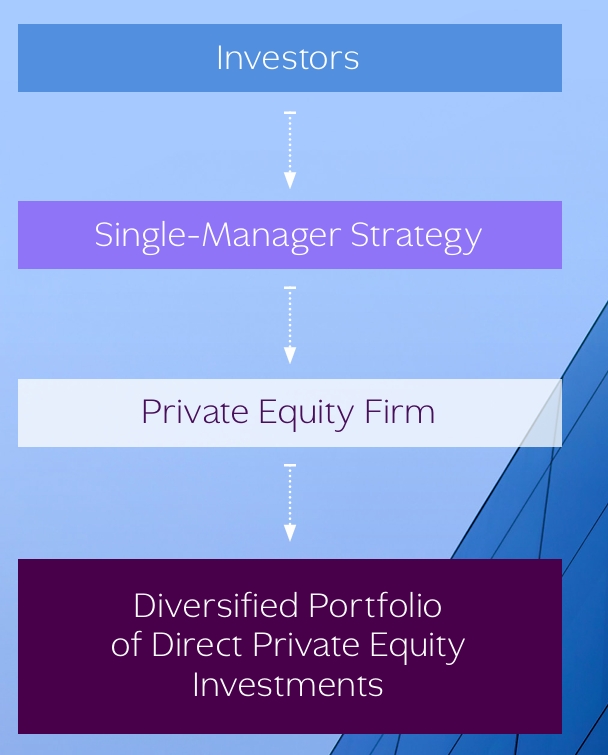
A single-manager evergreen strategy is managed by one private equity firm that sources, executes, and manages all investments directly. This approach offers:
- Priority access to deal flow
- Direct control over value creation
- Consistent valuation methodology
- A single layer of fees
Think of it as a dedicated partnership with one proven team—where alignment and transparency are paramount.
What Is a Multi-Manager Evergreen Strategy?
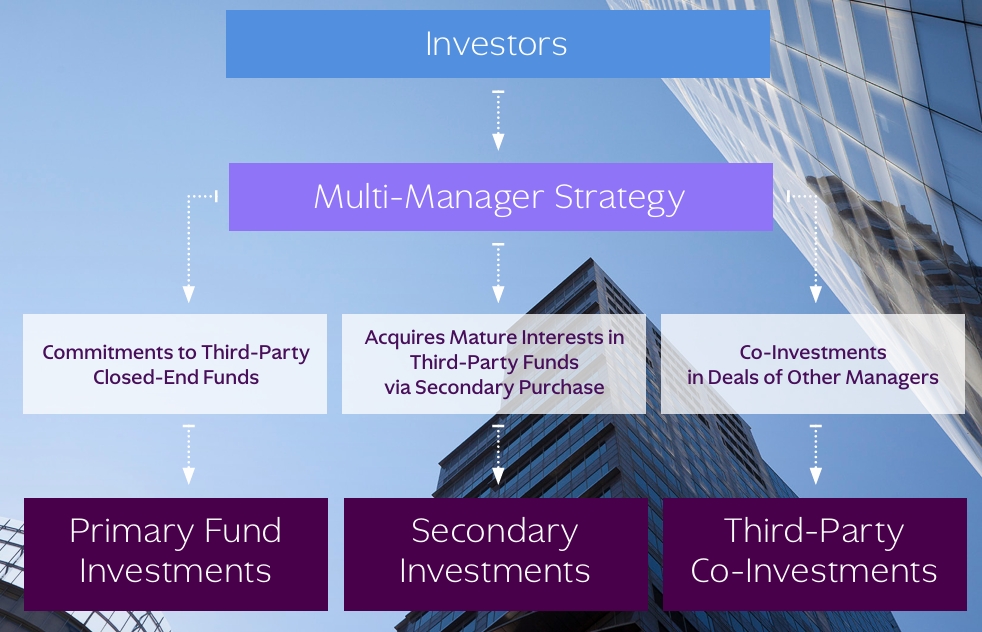
Multi-manager strategies aggregate investments across numerous third-party private equity funds, often through:
- Primary fund commitments
- Secondary purchases of mature fund interests
- Co-investments alongside other managers
This creates broad diversification but reduces direct control and adds layers of fees and complexity.
Critical Considerations for Investors
1. Access to Deal Flow
- Single-Manager: Typically receives priority access and can select investment size.
- Multi-Manager: Relies on co-investment opportunities, which may be limited or delayed.
2. Value Creation & Control
- Single-Manager: The investment team actively works to improve portfolio companies.
- Multi-Manager: Outsources value creation to third-party managers; often holds non-controlling stakes.
3. Portfolio Construction & Liquidity Management
- Single-Manager: Has real-time insight into deal pipelines, exits, and distributions.
- Multi-Manager: Often operates with lagged information, making liquidity management more challenging.
4. Valuation Transparency
- Single-Manager: Uses a consistent, often third-party-validated methodology.
- Multi-Manager: Must reconcile varying valuation approaches from multiple managers.
5. Fee Structure
- Single-Manager: One layer of fees (management + performance).
- Multi-Manager: Potential for double fees—to both the evergreen manager and underlying fund managers.
6. Diversification Approach
- Single-Manager: Diversifies across sectors, regions, and deal types within one firm’s strategy.
- Multi-Manager: Offers wide diversification across hundreds of managers and thousands of companies—closer to a “private equity index.”
Which Strategy Is Right for You?
The choice between single-manager and multi-manager evergreen private equity ultimately depends on your objectives:
- Choose Single-Manager If: You seek direct control, transparent valuations, priority deal access, and are confident in the manager’s ability to consistently generate alpha.
- Choose Multi-Manager If: Your priority is broad diversification across the private markets, you’re comfortable with less control, and you accept potentially higher fees for wider exposure.
The Bottom Line: Control Drives Outcomes
As KKR’s research highlights, single-manager, pure-play evergreen strategies provide the most control over underlying assets—and therefore the greatest influence over investment outcomes. In an asset class where manager selection is critical, aligning with a top-performing team in a transparent, fee-efficient structure can be the most effective way to capture the long-term appreciation potential of private equity.
🔗 Links for More:
Read full article on KKR website or from NeoForm LinkedIn page.
📌 About NeoForm:
At NeoForm Business Partners, we specialize in guiding transformational finance leaders through the complexities of private market strategies. Whether you’re evaluating evergreen structures, optimizing portfolio construction, or seeking deeper alignment with your private market investments, we’re here to help you navigate with clarity and confidence.
Visit our blog for more insights on M&A, private equity, private debt and private markets.
🔗 Related Readings:
- Midyear Private Equity Report 2025 by Bain
- McKinsey Global Private Markets Report 2025
- Private Equity 2025: AI, India & Exit Momentum Reshape Global Investment
- Private Equity Market Trends in 2025: A Year of Recovery and Strategic Shifts
- The Future of Investing: Private Markets and Credit in 2025
Need tailored solutions? Explore NEO Services or contact our partners to learn how our expertise can help you to elevate and execute your private equity strategies.