


We stand at a pivotal midpoint in a decade defined by artificial intelligence. What began as a wave of potential has hardened into a landscape of stark realities and accelerating divergence. Bain & Company’s Technology Report 2025 delivers a clear, evidence-based diagnosis: AI leaders are not just winning; they are systematically extending their edge, compounding gains while others remain stuck in pilot purgatory.
This isn’t merely a story of technology adoption. It’s a narrative about value concentration, geopolitical fragmentation, and operational reinvention. The report meticulously charts how a cohort of front-running companies is achieving 10-25% EBITDA gains by scaling AI across core workflows, while simultaneously navigating a world splintering into sovereign tech blocs.
For any executive, the central mandate is no longer to ask “if” but to decide “how fast” they will move from observation to execution. The cost of waiting has become dangerously high.
The AI Power Shift: Are Today’s Tech Giants Unstoppable?
The tech industry has always thrived on disruption. Every decade, a new wave—from personal computing to the internet to mobile—threatened to topple incumbents and crown new kings.
Yet, over the last 15 years, a curious pattern emerged: today’s giants—companies like Microsoft, Amazon, Apple, and Alphabet—proved remarkably resilient. They didn’t just survive disruption; they co-opted it, reinventing themselves time and again.
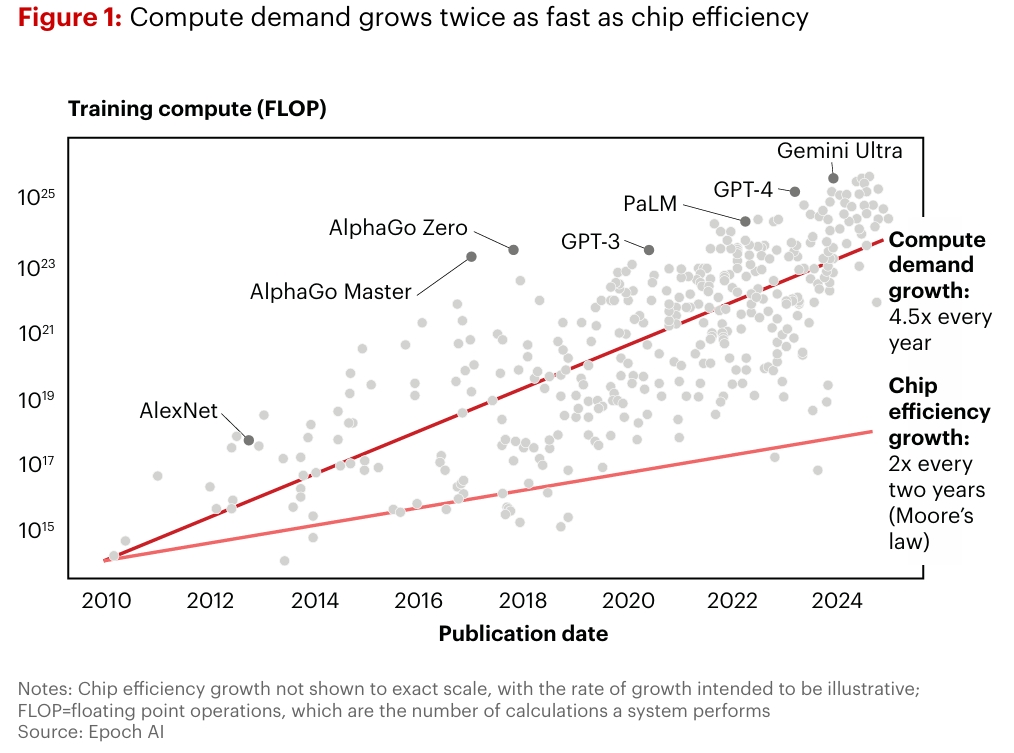
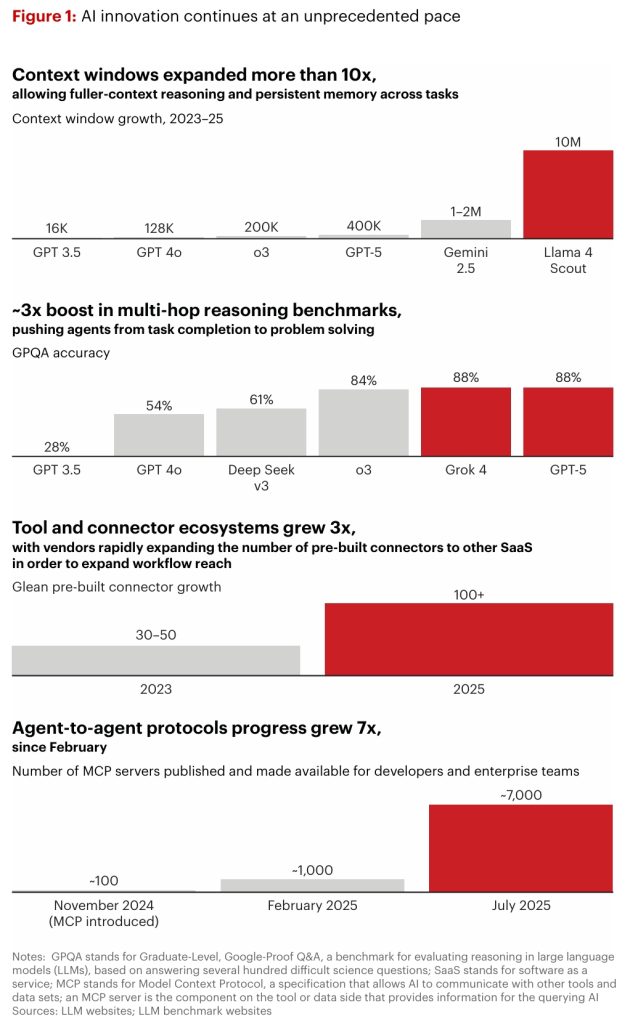
But a new force is here, moving at twice the speed of Moore’s Law: Artificial Intelligence. Now the question in Bain Technology Report 2025 is: Will AI disrupt tech’s most valuable companies?
The answer isn’t simple. It’s a tale of concentrated power, emerging insurgents, and a world fragmenting along new geopolitical fault lines.
The Concentration of Power & The Rise of the Challengers
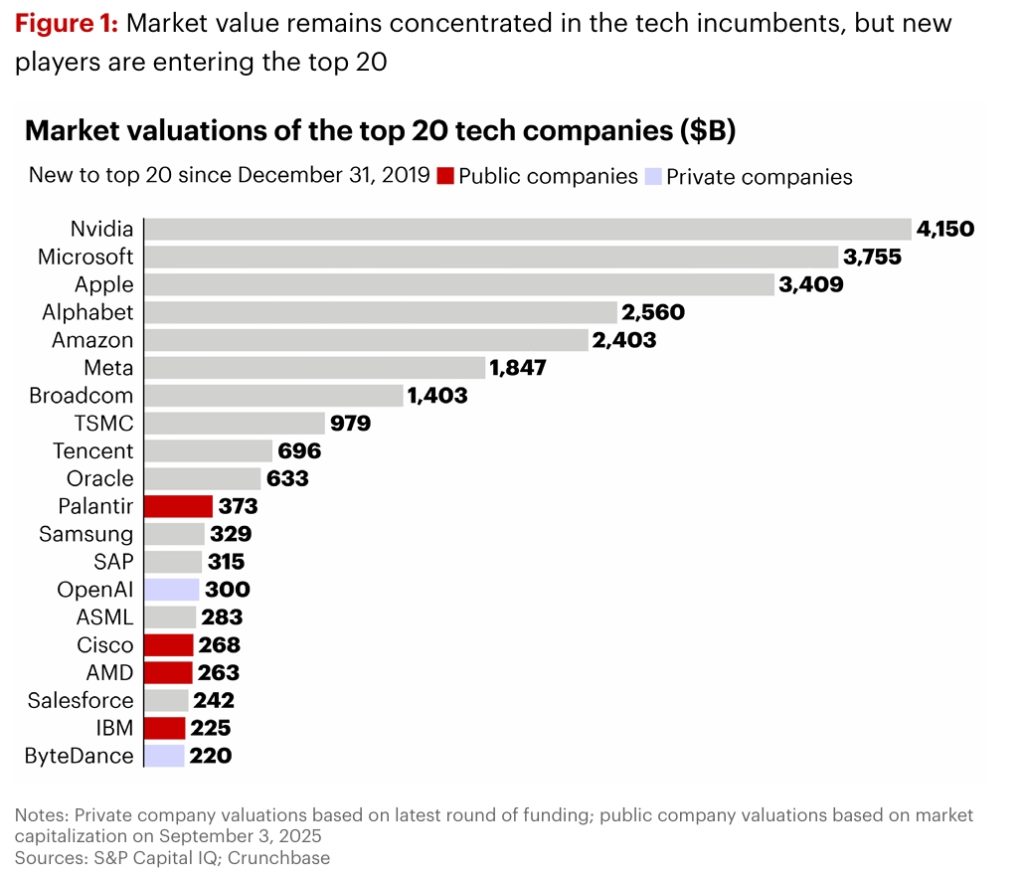
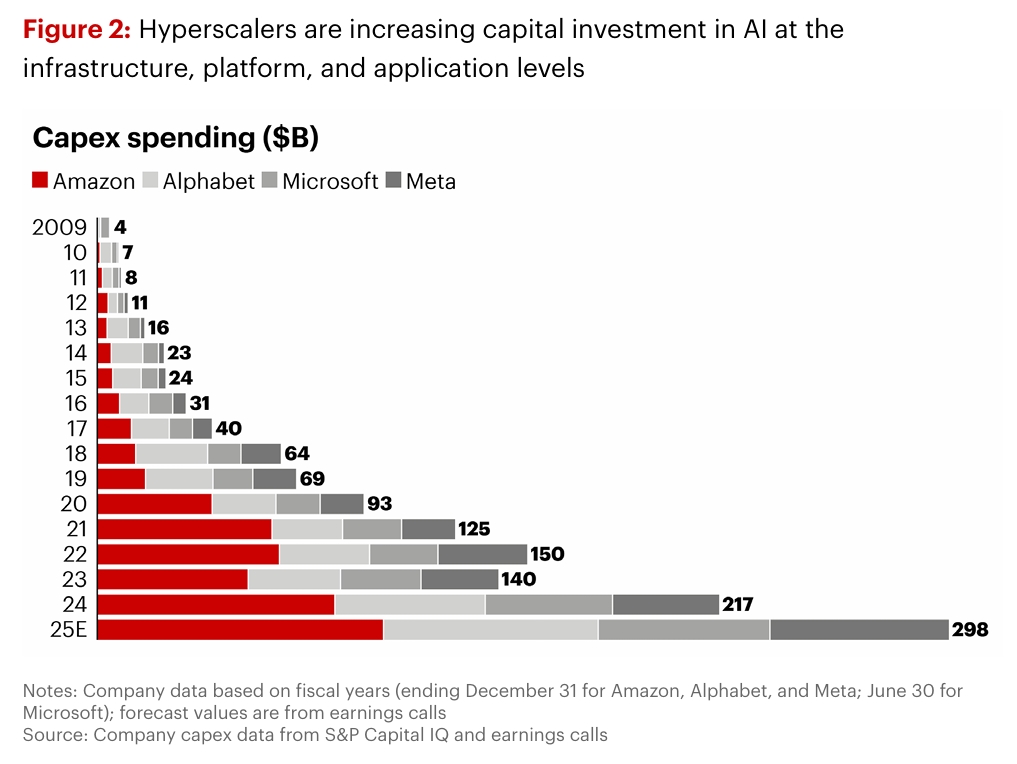
The early AI era has further cemented the dominance of the hyperscalers. The top five tech companies now account for over 70% of the top 20’s total market value. Nvidia’s meteoric rise and the trillion-dollar valuations of Microsoft, Amazon, and others are fueled by massive capital investments in AI infrastructure, models, and talent.
But beneath this concentration, a new ecosystem is bubbling. OpenAI, valued at an estimated $300 billion, leads a pack of formidable challengers like Anthropic, Mistral, and Glean. These players are proving that foundational innovation isn’t the sole domain of giants. They’re agile, focused, and well-funded, competing at every layer of the AI stack:
- Infrastructure: Specialized players like CoreWeave challenge cloud incumbents with GPU-as-a-service offerings.
- Models: OpenAI, Anthropic, and others are pushing the boundaries of what’s possible, often with backing from the very giants they compete with.
- Applications: Startups like Anysphere (behind the AI-powered Cursor editor) show that a best-in-class product can win against bundled offerings from large firms.
The battleground has also expanded to devices (AI phones), search (chatbots as the new entry point), and browsers, reigniting competitive wars we haven’t seen in decades.
The Great Fragmentation: Sovereign Tech in a Divided World
AI isn’t unfolding on a neutral, global stage. Geopolitics is now a core dimension of tech strategy. The era of seamless global supply chains is over, replaced by tariffs, export controls, and the urgent push for “Sovereign AI.”
- The Semiconductor Choke Point: The U.S.-China tech decoupling centers on chips. While the U.S. tightens controls, China is racing toward self-reliance, investing over $250 billion and now accounting for roughly 20% of global semiconductor capacity. This isn’t just about leading-edge chips; control over mature nodes is a critical strategic lever.
- The Sovereign AI Imperative: Nations are no longer content to rely on foreign AI ecosystems. Sovereign AI means systems trained on domestic data, hosted in national data centers, and aligned with local values and regulations. From the EU’s €200 billion InvestAI initiative to Saudi Arabia’s new AI firm Humain, countries are building their own capabilities to ensure security, privacy, and strategic autonomy.
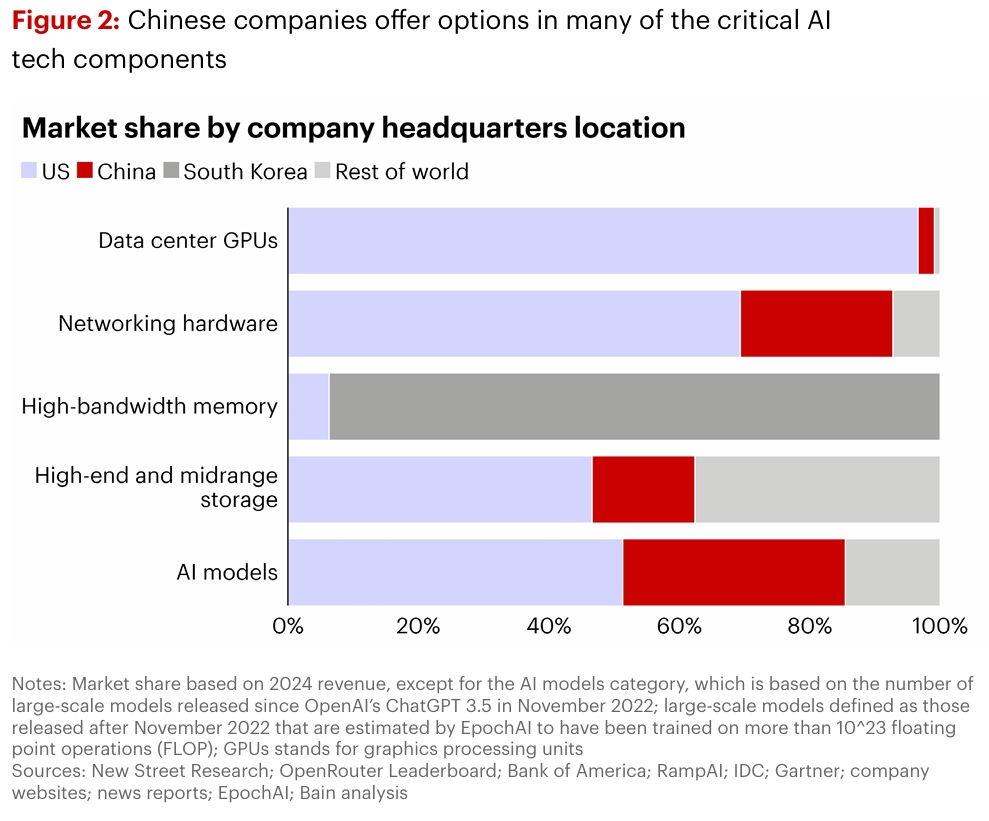
For tech leaders, this creates a patchwork reality. A single AI workflow may need retooling for different markets, with varying models, data practices, and infrastructure requirements. The dream of a single global AI standard is fading fast.
The New Playbook for Tech Leaders in 2025
In this complex landscape—simultaneously consolidating and fragmenting—what’s the path forward? Bain Technology Report 2025 outlines distinct strategies:
- For Incumbent Tech Leaders: Double down on what you do best: disrupt yourself. Continue to innovate, attract elite talent, and use acquisitions and partnerships to fill capability gaps. The competition is at more layers than ever, but so are the opportunities.
- For Legacy Technology Companies: Embrace and extend, but act with urgency. Start by optimizing costs, then aggressively monitor the horizon. Invest in innovation, leverage partnerships, and deeply understand customer needs to reinvent your value proposition.
- For Disruptors and Start-ups: Be brutally realistic about the scale required to compete with giants. Develop a magnetic talent strategy. Your advantage is agility and focus—find underserved niches and redefine the basis of competition.
The Bottom Line: Adaptability is the New Currency
The AI wave is broader and faster than any that came before it. It is reshaping business, politics, and global power structures simultaneously. The companies that will thrive are those that master a new kind of duality: the ability to compete at global scale while navigating local fragmentation.
The easy wins are over. The next phase of value creation will belong to those who can execute with precision, adapt with speed, and make bold strategic bets in a world where the only constant is disruption.
Beyond the Hype: The Four Strategic Battlegrounds Redefining Tech in 2025
Bain & Company’s Technology Report 2025 identifies four critical “Strategic Battlegrounds” where the future of the tech industry—and the businesses that rely on it—is being decided right now.
Battleground 1: Agentic AI vs. The SaaS Empire
Software-as-a-Service (SaaS) revolutionized business by moving applications to the cloud. Now, a new revolution is at the door. Agentic AI—systems that can reason, decide, and act autonomously—isn’t just a feature to be added to existing software; it’s a potential unbundler and rebundler of entire workflows.
Imagine an AI that doesn’t just help you write a report in your word processor but can autonomously gather data, analyze it across multiple platforms, draft the report, get approvals, and distribute it. This shift from “human + app” to “AI agent + API” threatens the very foundation of seat-based, subscription SaaS models.
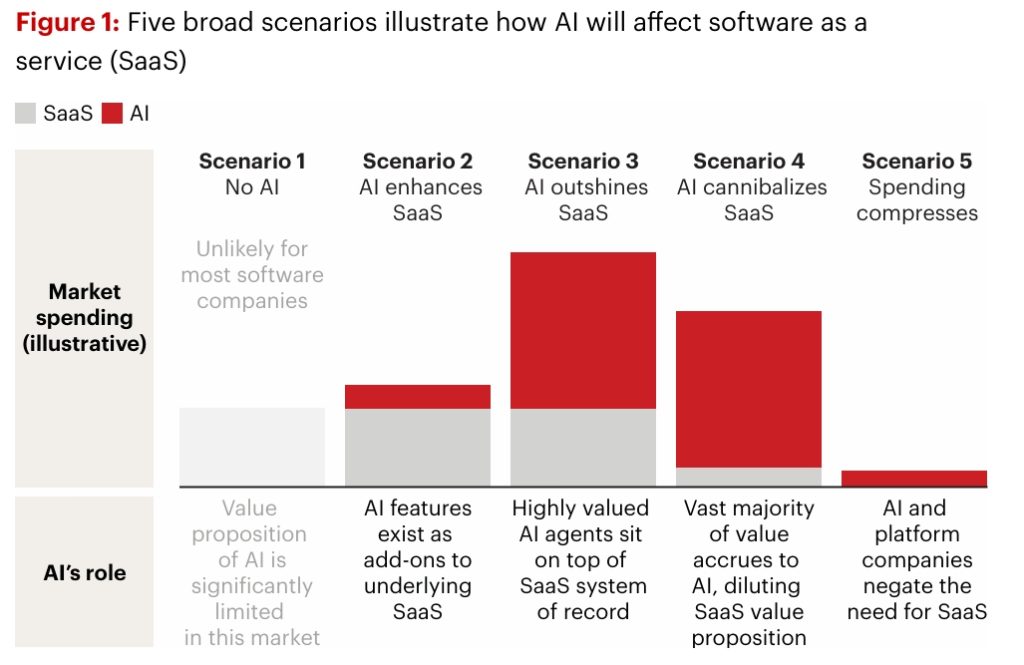
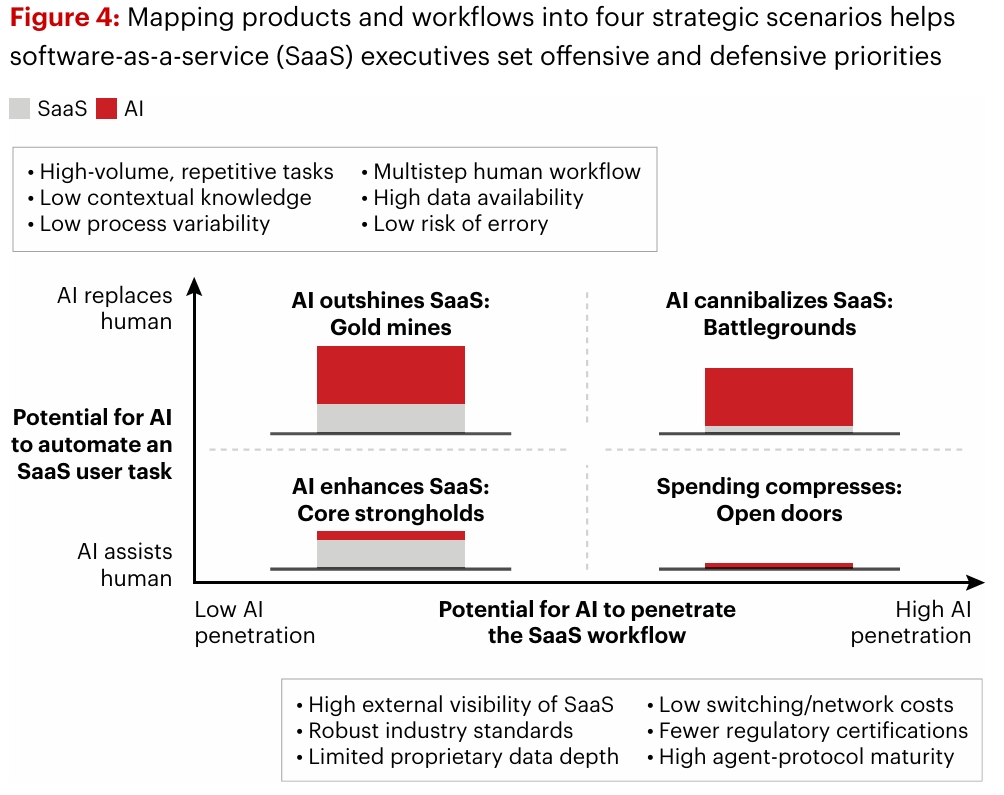
The critical question for every SaaS leader: Is your product an AI enhancer, or is it at risk of being cannibalized? The winners will be those who use their unique data as a moat, shift pricing to value-based outcomes, and take the lead in establishing the semantic standards that will allow agents to communicate. Disruption is mandatory; obsolescence is optional.
Battleground 2: Powering the AI Beast: The Insatiable Demand for Compute
Here’s a staggering fact: The growth rate for AI’s compute demand is more than twice the historic rate of Moore’s Law. This isn’t a short-term crunch; it’s a fundamental reshaping of infrastructure.
Bain’s analysis suggests that by 2030, the US alone could need an additional 100 gigawatts of power for AI data centers—equivalent to the output of about 100 large nuclear plants. The capital investment required is astronomical, potentially reaching $500 billion annually.
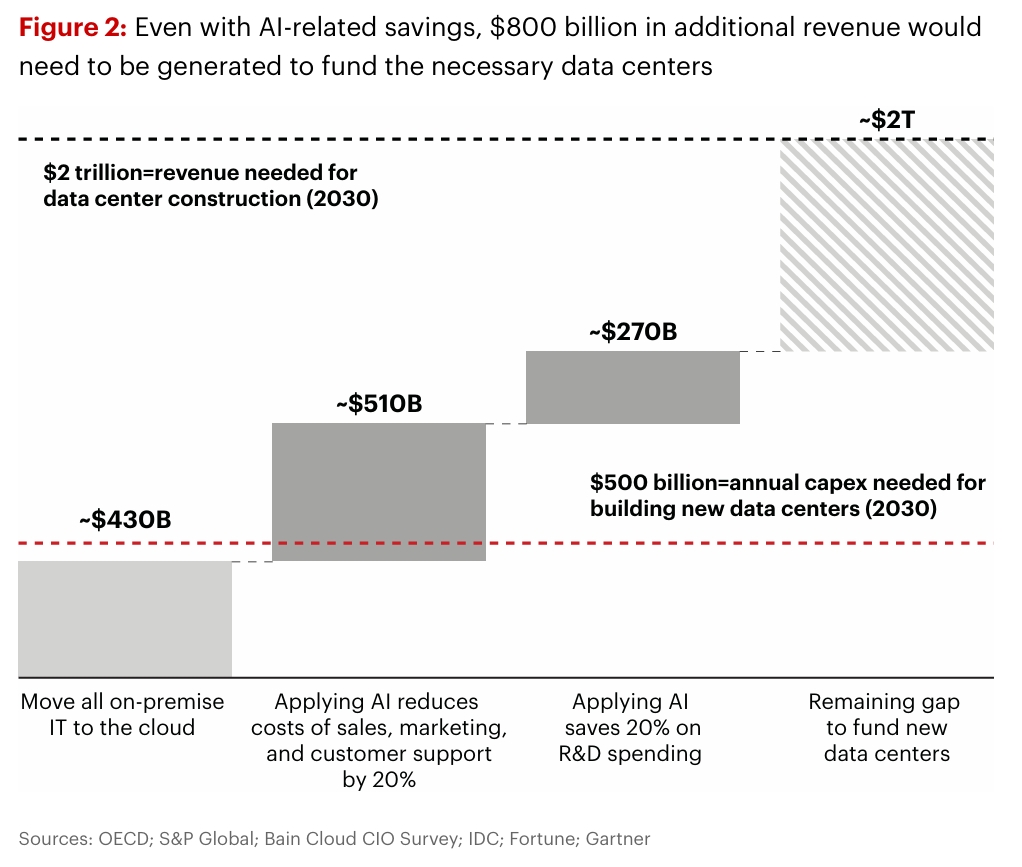
This creates a precarious balancing act for executives:
- Bet on continued growth and risk catastrophic unutilized capacity if the trend slows.
- Bet on a slowdown and risk being left without the capacity to capture the next wave of innovation.
The path forward hinges on a mix of technological breakthroughs (like specialized AI chips), algorithmic efficiencies, and unprecedented levels of investment and public-private cooperation. The companies that control or efficiently access compute power will hold a decisive strategic advantage.
Battleground 3: Humanoid Robots: From Viral Demos to Real Deployment
Humanoid robots have captured the imagination (and billions in venture capital). But beyond the viral videos, a pragmatic timeline for deployment is taking shape. These aren’t general-purpose replacements for humans yet; they are highly specialized tools for specific environments.
Progress is being gated by four key capabilities, advancing at different speeds:
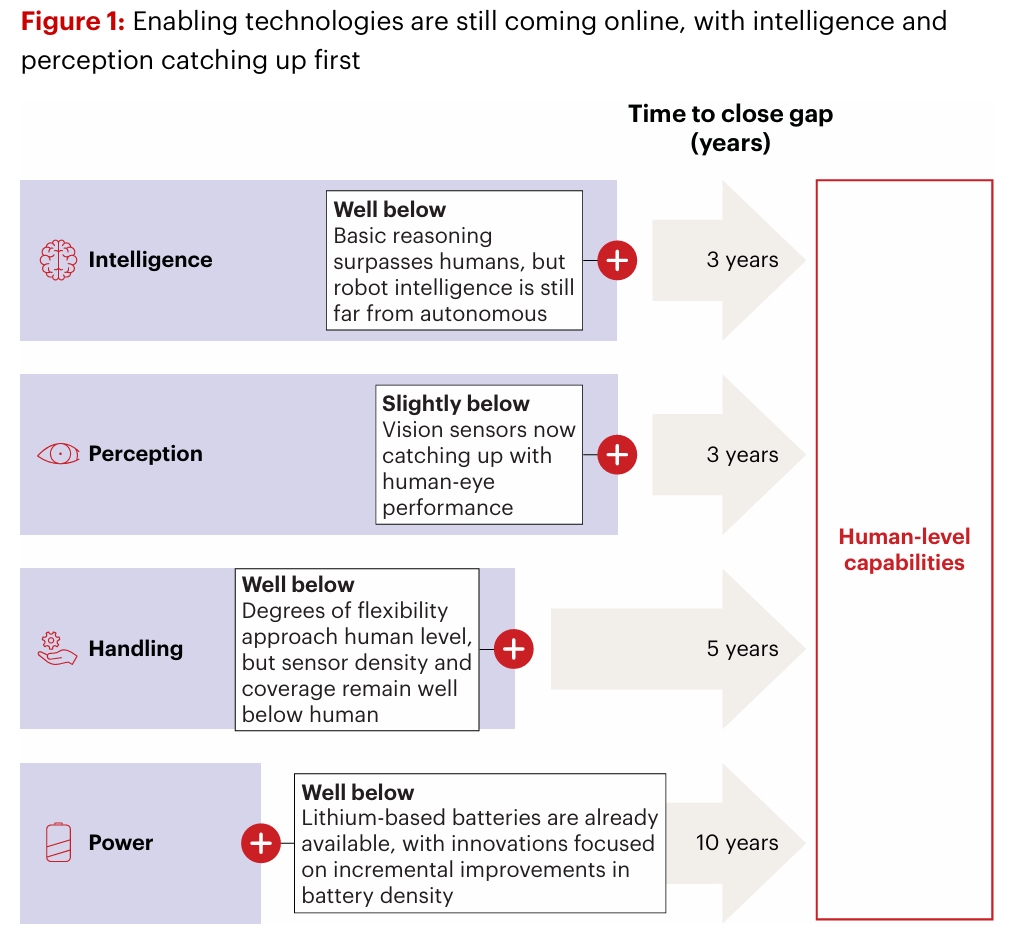
- Intelligence & Perception (3-5 years to human parity): Powered by generative AI, these are advancing fastest.
- Handling/Dexterity (~5 years): Crucial for complex tasks, but many industrial jobs don’t require full human-level finesse.
- Battery Power (10+ years): The ultimate limiter. A full 8-hour shift without intervention remains a distant goal.
The strategic implication is clear: early value lies in semi-structured, controlled environments like warehouses and factories for tasks like tote picking and palletizing. Leaders should start piloting now in these areas to build operational knowledge, trust, and data, preparing for the wave of broader deployment in the coming decade.
Battleground 4: Quantum Computing: From Theoretical to Inevitable
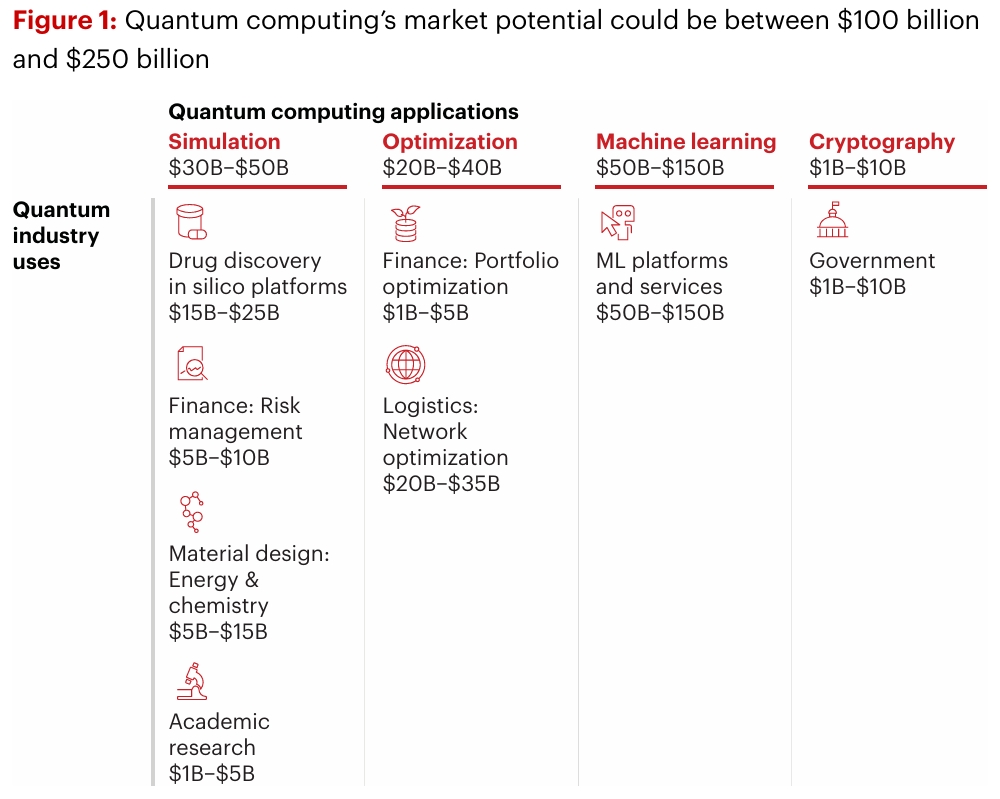
Quantum computing has crossed a threshold. It’s no longer a lab experiment but an impending reality with a potential market impact of up to $250 billion. While a fully fault-tolerant quantum computer is still years away, the time to prepare is now.
The most immediate and universal threat is cybersecurity. Quantum computers will eventually break today’s standard encryption. A “harvest now, decrypt later” attack strategy is already a real concern. Bain’s survey reveals that while 95% of tech leaders understand this risk, only 9% have a roadmap to address it through Post-Quantum Cryptography (PQC). Updating cryptographic foundations is a multi-year endeavor that cannot wait.
Looking ahead, quantum will not replace classical computing but complement it, forming a hybrid “mosaic” of solutions. It will first excel in specific simulation and optimization problems in pharmaceuticals, finance, and materials science. Companies in these sectors should start defining use cases, building talent pipelines, and forming partnerships today.
The Common Thread: Strategic Foresight & Pragmatic Action
Bain Technology Report 2025 concludes that across all four battlegrounds, a consistent theme emerges for leaders:
- Look Beyond the Hype: Assess the real capability trajectories, not just the headline-grabbing demos.
- Build Foundational Readiness: Whether it’s cleaning data for AI, securing systems for quantum, or piloting robots in a warehouse, hands-on learning is irreplaceable.
- Embrace a Hybrid Future: The next decade will be defined by integration—AI with human workflows, quantum with classical compute, robots with existing automation.
The strategic battlegrounds of 2025 are where competitive advantages will be built or lost. The companies that will thrive are those moving decisively from observation to orchestration, shaping these disruptive forces rather than being shaped by them.
From Pilots to Payoff: How Leaders Are Finally Unlocking AI’s Operational Value
For two years, the promise of generative AI has been met with a frustrating reality for many businesses: pilots that fizzle, productivity bumps that don’t translate to profits, and a nagging question—where’s the real payoff?
Bain & Company’s Technology Report 2025 reveals a decisive split. While most organizations remain stuck in experimentation mode, a cohort of tech-forward leaders have cracked the code, moving from isolated pilots to enterprise-wide transformations that deliver 10-25% EBITDA gains.
The message is clear: the era of waiting is over. Falling behind now risks ceding competitive ground that may be impossible to regain.
The Leadership Playbook: How to Scale AI Beyond the Pilot
The leaders who have successfully scaled AI didn’t just deploy more chatbots. They executed a fundamental operational transformation, characterized by five critical actions:
- Set Ambitious, Top-Down Goals: They moved beyond bottom-up experimentation. Targets were set based on diagnostic analysis of entire workflows, not isolated use cases.
- Made GMs (Not IT) Accountable: Business unit leaders, not the CIO, were charged with hitting these targets, ensuring AI was tied directly to business outcomes.
- Redesigned Entire Workflows: They didn’t automate siloed tasks; they reimagined end-to-end processes to remove bottlenecks and unlock new ways of working.
- Curated Data Pragmatically: Instead of attempting a costly, enterprise-wide data cleanup, they focused on curating and cleaning the specific data needed for each high-priority workflow.
- Built, Bought, or Partnered with Purpose: They adopted a flexible capability model, using the fastest path (internal development, vendor purchase, or partnership) to solve each workflow challenge.
The biggest insight? The heaviest lifting is in process redesign and data curation. There are no technical shortcuts.
The New Frontier: Agentic AI in Action
As leaders master scaling single-task AI, the next wave is already here: Agentic AI. These are systems that can plan, execute multi-step workflows, and make decisions with minimal human prompting. Bain Technology Report 2025 spotlights that early adopters are deploying them in two key operational areas:
1. Transforming Sales: From Administrative Burden to Revenue Engine
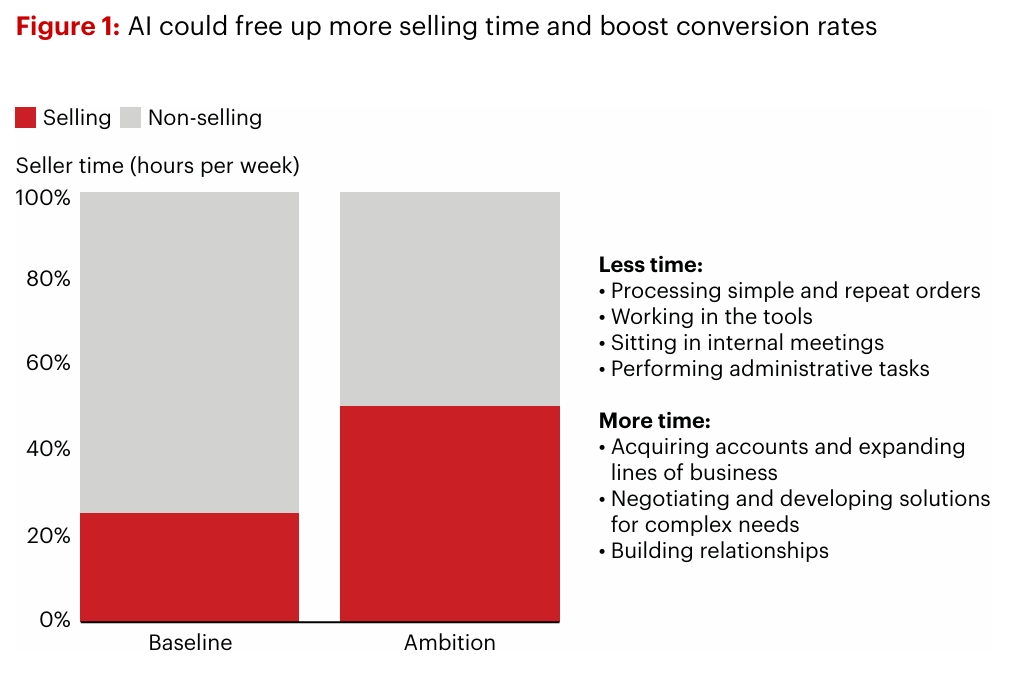
Sales has lagged in capturing AI value, but the potential is immense. Sellers spend only about 25% of their time actually selling. Agentic AI can double that by automating lead research, outreach, follow-ups, and content generation. Early results show more than 30% improvements in win rates.
The key is to move beyond automating old processes. Success requires reimagining the sales lifecycle, cleaning go-to-market data, and securing C-level sponsorship to drive adoption at scale.
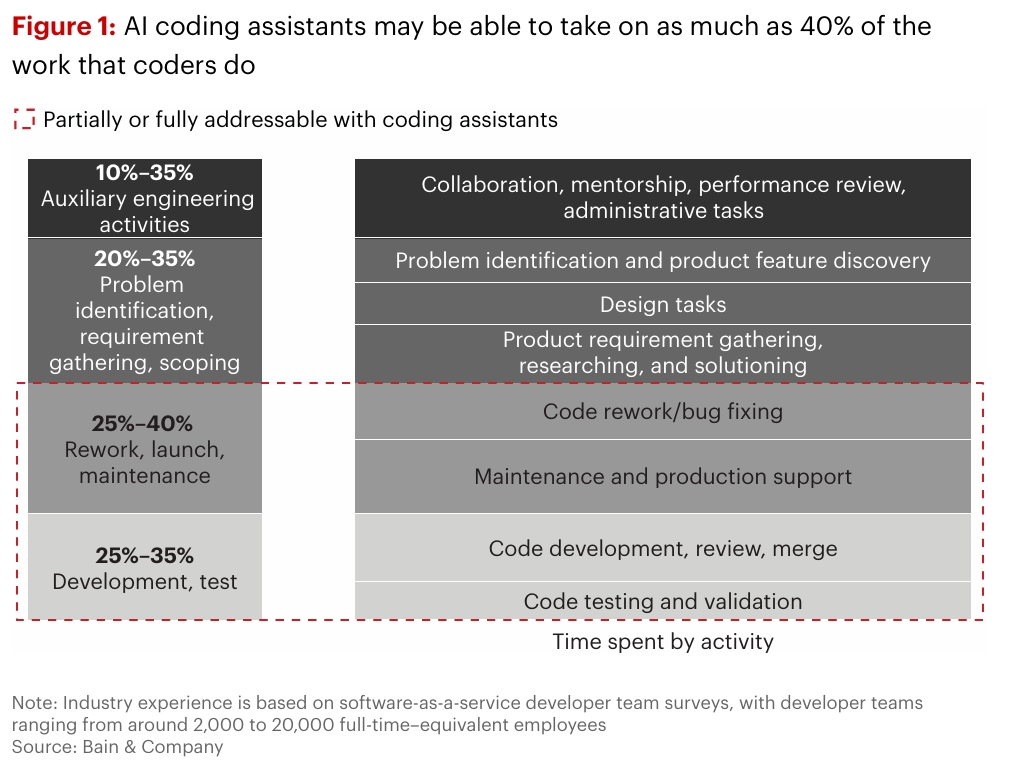
2. Revolutionizing Software Development: From Code Copilot to Autonomous Workflow
While AI coding assistants offer 10-15% productivity gains, the real value is captured by applying AI across the entire software development lifecycle—from requirement gathering and design to testing and maintenance.
Leading companies like Goldman Sachs are integrating AI into their internal platforms, enabling context-aware code generation and testing that dramatically accelerates cycles. The next step is autonomous agents that can manage multi-step development tasks, shifting the engineer’s role to that of an “orchestrator” or “intent engineer.”
Building the Foundation for an Agentic Future
To capture the full value of agents that can reason and act across systems, companies must modernize their architectural foundation. Agentic AI isn’t just another tool; it’s a structural shift in enterprise technology.
Tech leaders must prepare by:
- Modernizing Core Platforms: Ensuring systems are API-accessible and can interact in real-time.
- Ensuring Interoperability: Adopting protocols (like Model Context Protocol – MCP) so agents can communicate across different platforms and vendors.
- Scaling Data Access: Building pipelines for both structured and unstructured data (emails, calls, documents) that agents need for contextual reasoning.
- Evolving Governance: Implementing real-time explainability, observability, and adaptive security to manage the risks of autonomous decision-making.
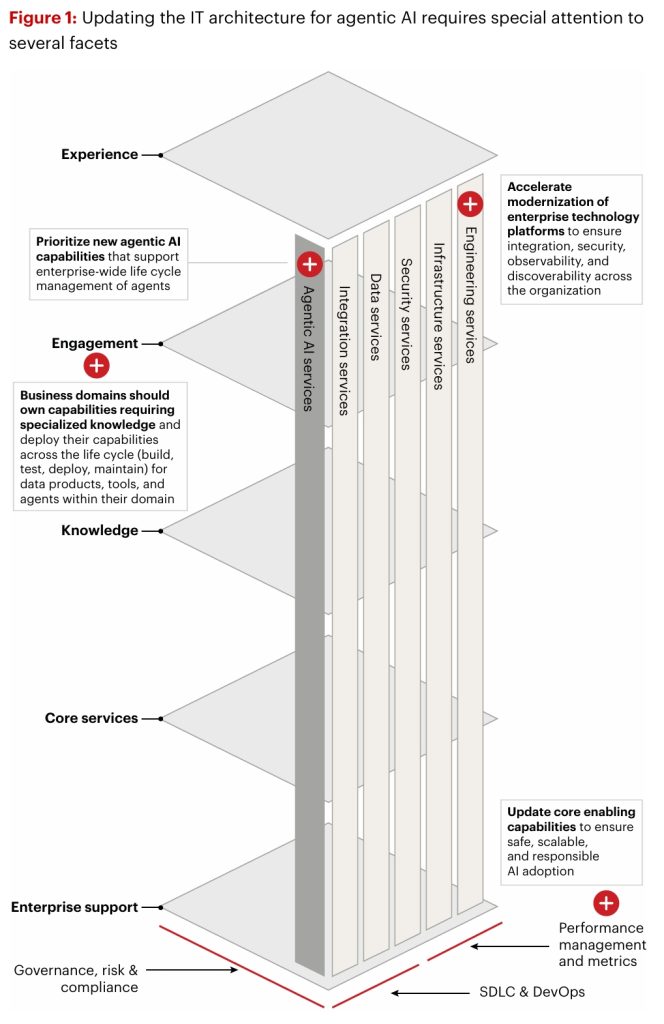
Investment is shifting accordingly. In the next 3-5 years, 5-10% of tech spending may go toward these foundational capabilities, with up to half of all tech spend eventually flowing through agents that run enterprise workflows.
The Imperative: Act with Pragmatism, Not Purity
The overarching lesson from front-running companies is to avoid “analysis paralysis.” The pace of AI innovation is too fast for a purist, wait-and-see approach.
- Follow the Taillights: The playbook for initial AI scaling is now proven. Learn from leaders.
- Prioritize Flexibility: Balance a long-term architectural vision with fit-for-purpose, domain-specific solutions that deliver value now.
- Focus on Process & Data: Regardless of the AI model, transformative results hinge on workflow redesign and data readiness.
The gap between AI experimenters and AI transformers is becoming a chasm. The companies achieving extraordinary operational results aren’t just using AI—they are operationalizing intelligence. The time to build that foundation is now.
Bain Technology Report 2025: Conclusion
Adaptability is the new competitive currency. The defining battles of this era—whether preserving value in a consolidating yet fragmenting market, choosing the right strategic battlegrounds in AI and quantum, or operationalizing intelligence at scale—all demand a new playbook.
The winners will be those who embrace pragmatic action over purist planning. They will follow the taillights of proven leaders, modernize their foundations with flexibility, and empower their business units to own AI-driven outcomes. They understand that the heaviest lift is not in adopting the latest model, but in the relentless work of redesigning processes and curating data.
We are witnessing the creation of a new economic divide, drawn not by geography but by technological velocity. On one side are the transformers, building an insurmountable lead. On the other are the experimenters, at risk of perpetual catch-up.
The insights from 2025 serve as both a roadmap and a warning. The time for strategic clarity and decisive operational investment is not tomorrow—it is today. The edge is being extended. The question is, on which side of the divide will your organization stand?
🔗 Links for More:
Read the full “Bain Technology Report 2025” on Bain website or NeoForm LinkedIn page.
📌 About NeoForm:
At NeoForm Business Partners, we empower enterprises to maximize sustainable growth and profitability through financial efficiency & agility and manage internal and environmental risks with our transformational CFO services and strategic finance business partnering.
Visit NeoForm blog for more insights on technology, business and environment trends.
🔗 Related Readings:
- McKinsey Technology Trends 2025: What Is Crucial to Align Your Business
- The Next Big Arenas of Competition: 18 Super High Growth Sectors Shaping the Future Economy
- The Great Trade Rearrangement: McKinsey Insights for Global Supply Chain
- How Global Economic Profit Reached an All-Time High
- Turning Sustainability into Growth: The Pragmatist’s Playbook for Visionary CEOs by Bain
At NeoForm, we help business leaders decode complex market shifts and build strategies that drive sustainable economic profit. Explore NEO Services or Contact us today to turn these insights into your competitive advantage.
1 Comment
Venture Capital Report 2025 Q3: KPMG Insights - NeoForm Business Partners
[…] Bain Technology Report 2025: AI is Dividing Leaders […]