

In today’s fast-changing business landscape, traditional budgeting and forecasting methods often fall short. Companies spend months crafting meticulous plans—only for them to become obsolete within weeks. The Business Partnering Institute (BPI) addresses this challenge in The Planning and Forecasting Blueprint, a powerful guide outlining FP&A best practices as 10 core principles to revolutionize financial planning, budgeting and forecasting.
Whether you’re in FP&A (Financial Planning & Analysis), finance leadership, or business strategy, these principles will help you simplify processes, improve accuracy, and enhance agility. Let’s dive into the key takeaways from this essential blueprint.
Why Traditional Planning Fails (And What to Do Instead)
Many organizations treat budgeting as a rigid, time-consuming exercise rather than a dynamic, strategy-aligned process. Common pitfalls include:
- Misalignment with strategy – Plans are disconnected from long-term goals.
- Overly complex models – Excessive detail leads to confusion and inefficiency.
- Lack of collaboration – Finance teams work in silos instead of engaging the whole company.
- Slow re-forecasting – Businesses take weeks (or months) to adjust to market changes.
BPI’s blueprint offers a better way—focusing on simplicity, agility, and cross-functional collaboration.
The 10 Core Principles of Planning & Forecasting
1. Always Align Your Plan with Strategy
A plan without strategic alignment is just a set of numbers. FP&A must bridge the gap between high-level vision and execution by:
- Translating strategy into actionable KPIs.
- Ensuring all departments work toward the same objectives.
- Regularly reviewing assumptions to stay on course.
“A budget is not an attempt to predict the future. It’s a navigation manual for a journey into the unknown.”
2. Document Your Assumptions (The Most Critical Step!)
Every forecast is built on assumptions—but most companies fail to track and validate them. BPI recommends:
- Using hypothesis-driven planning (common in agile development).
- Testing assumptions with real-world experiments.
- Continuously refining forecasts based on feedback.
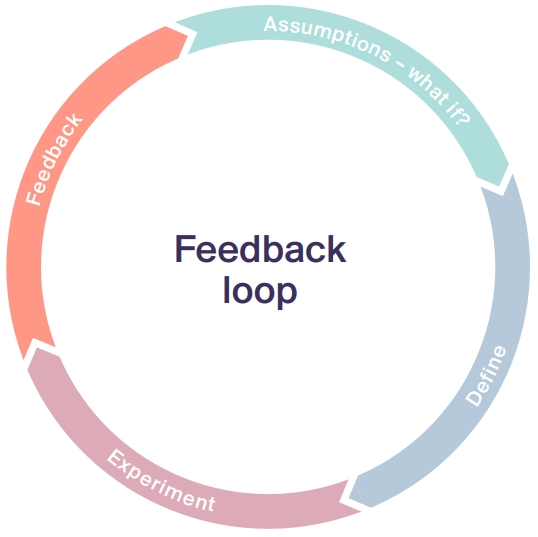
3. Maintain a Robust Feedback Loop
A static plan is a failing plan. To stay agile:
- Use real-time data (e.g., market trends, operational KPIs).
- Implement AI-driven analytics to detect early warning signs.
- Adjust forecasts before deviations become crises.
4. Blow Up Your Budget Process
Traditional budgeting combines target setting, forecasting, and resource allocation—leading to inefficiency. Instead:
- Separate these processes for clarity and flexibility.
- Focus on driver-based planning (key business drivers over arbitrary targets).
- Reduce complexity to speed up decision-making.
5. Accuracy Is an Outcome, Not a Goal
Chasing “perfect” forecasts is futile. Instead:
- Measure confidence intervals of assumptions.
- Focus on actionable insights rather than precision.
- Use forecasts as guidance, not gospel.
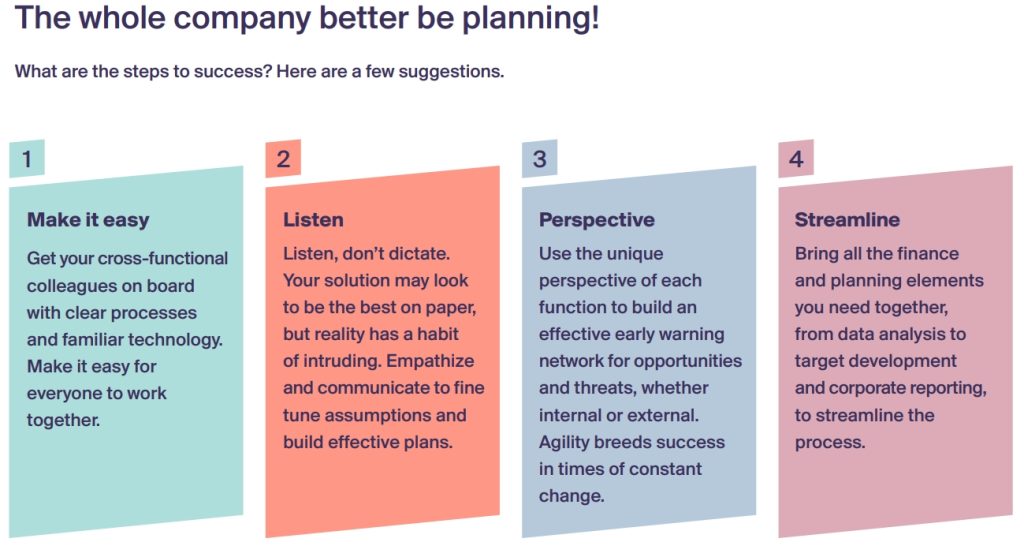
6. Planning Is a Company-Wide Effort
Finance shouldn’t work in isolation. Involve all departments by:
- Making planning tools user-friendly for non-finance teams.
- Encouraging collaborative target-setting.
- Ensuring every team understands their role in execution.
7. Simplicity Wins Every Time
Complex models increase errors and reduce trust. Best practices:
- Avoid jargon—explain plans in plain language.
- Use visual dashboards for clarity.
- Keep models transparent and easy to adjust.
8. Re-Forecast in a Week (Not a Month!)
In volatile markets, speed is everything. To enable rapid re-forecasting:
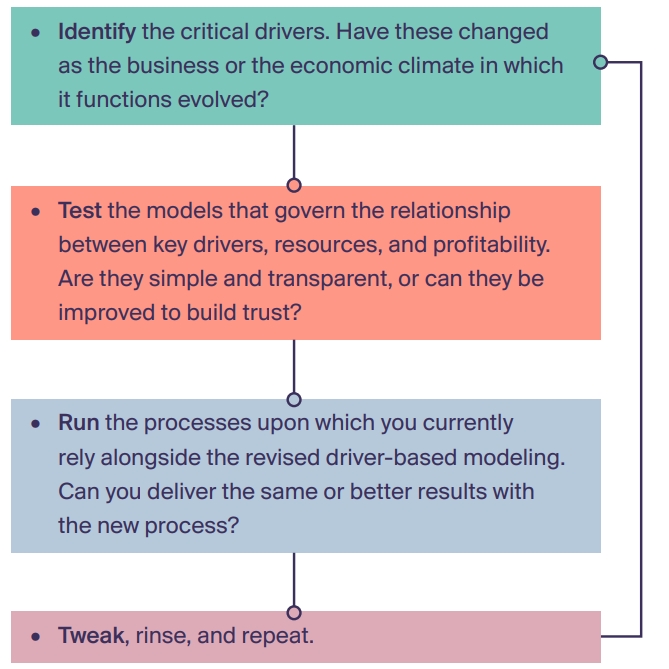
- Identify key business drivers (e.g., sales volume, supply chain costs).
- Automate data collection with AI and cloud tools.
- Train teams to pivot quickly when conditions change.
9. Always Prepare Multiple Scenarios
The future is unpredictable. Best-in-class planners develop:
- Best-case, worst-case, and realistic scenarios.
- Contingency plans for market shocks (e.g., supply chain disruptions).
- Trigger points for when to switch strategies.
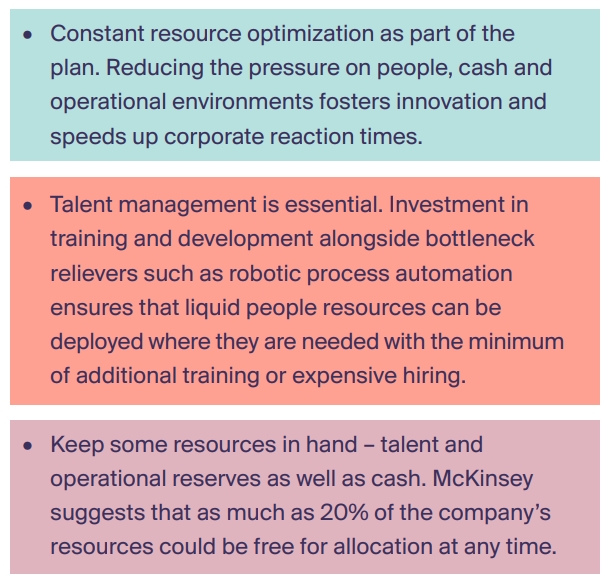
10. Plan with Contingencies (Resource Liquidity)
Great planners don’t commit 100% of resources upfront. Instead:
- Keep 20% of resources flexible (McKinsey recommendation).
- Build talent pipelines for rapid scaling.
- Stay ready to seize unexpected opportunities.
How to Implement FP&A Best Practices
- Audit your current process – Where are the biggest inefficiencies?
- Start small – Pick one principle (e.g., simplifying models) and test improvements.
- Leverage technology – digital FP&A solutions streamline planning.
- Train teams – Ensure finance and operations collaborate effectively.
- Iterate and improve – Treat planning as a continuous feedback loop.
Final Thoughts: The Future of Planning & Forecasting
The best companies don’t just plan—they adapt. By embracing these top 10 principles and following FP&A best practices, you can:
✔ Reduce wasted time on outdated budgeting.
✔ Improve agility in volatile markets.
✔ Align finance with strategy for long-term success.
Links For More
Download BPI’s full Planning & Forecasting Blueprint here or NeoForm LinkedIn Page.
Browse more insightful guides on BPI’s library or NeoForm Blog.
Ready to transform your planning process? Check Neo Services and Contact our partners for transforming your classic budgeting process into an agile, effective and integrated financial planning.
5 Comments
5 Ways to Transform Annual Planning & Budget to Worth the Effort - NeoForm Business Partners
[…] FP&A Best Practices: Top 10 Principles of Effective Budgeting & Forecasting […]
How to Build a Dynamic Budget for an Era of Accelerating Uncertainty - NeoForm Business Partners
[…] FP&A Best Practices: Top 10 Principles of Effective Budgeting & Forecasting […]
FP&A Transformation: Unlocking the Billion-Dollar Opportunity for Your Business - NeoForm Business Partners
[…] FP&A Best Practices: Top 10 Principles of Effective Budgeting & Forecasting […]
10 Key Trends to Transform Financial & Business Planning & Forecasting - NeoForm Business Partners
[…] FP&A Best Practices: Top 10 Principles of Effective Budgeting & Forecasting […]
AI Agents in FP&A: Autonomous Future of Finance - NeoForm Business Partners
[…] FP&A Best Practices: Top 10 Principles of Effective Budgeting & Forecasting […]
Comments are closed.