


The CFO’s Playbook: 4 Data-Backed Rules for Leading a Successful Transformation
In today’s volatile economic climate, standing still is not an option. Companies are constantly pushing to transform—to reinvent capabilities, boost performance, and reshape culture. And at the heart of this effort, increasingly, is the Chief Financial Officer. But, how can CFOs lead successful transformations?
A recent McKinsey CFO Pulse Survey reveals that a staggering 52% of CFOs now spend most of their time leading transformations, either within finance or across the entire enterprise. But how they invest that time is what separates a fleeting initiative from a truly transformative, sustained success.
The survey pinpointed four critical areas where successful CFOs focus their energy—and, just as importantly, the common pitfalls to avoid. Here’s your data-backed playbook for CFOs to lead transformations that delivers lasting value.
1. Do: Build Your Cross-Functional Team First. Don’t: Fixate on the Budget or External Factors.
The Insight: Successful transformations are built on people, not just plans. CFOs who reported to lead successful transformations overwhelmingly identified assembling a cross-functional team as their top priority in the initial phase. This isn’t about identifying the need for change—that’s a given—but about building the coalition with the right skills to lead it.
The Pitfall: Less successful CFOs tend to focus externally too early, looking at market trends before ensuring internal capabilities are in place. They are also twice as likely to prioritize aligning with the CEO on the budget from the start.
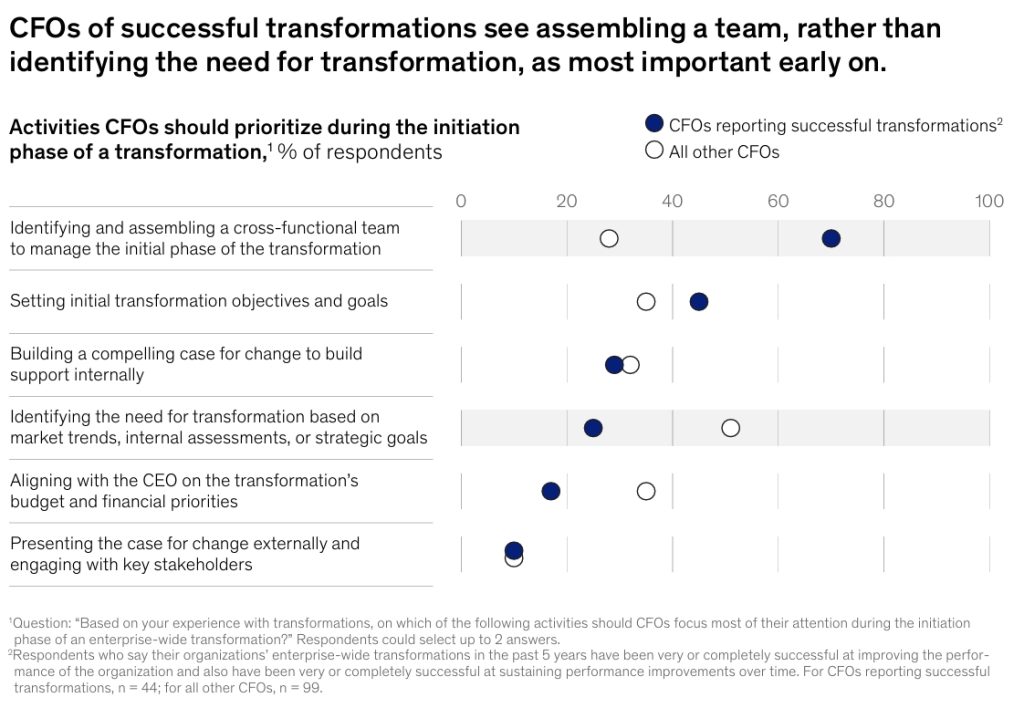
Why It Works: A powerful, skilled team can navigate complexity and adapt the strategy. A budget without the right team is just a number on a page. By first convening the right people, you build the engine that will drive the entire transformation forward.
2. Do: Set Clear Metrics to Track Progress. Don’t: Re-analyze Your Strategy Mid-Stream.
The Insight: During the due diligence and planning phase, the CFO’s primary role is to establish clarity. Both successful and less-successful CFOs agree: setting performance metrics and KPIs is job number one. This creates a shared, objective view of progress.
The Pitfall: The danger in this phase is “analysis paralysis.” By now, your strategy should be set. Unsuccessful transformations often see CFOs spending time analyzing new growth areas instead of dynamically funding the initiatives already identified as most promising.
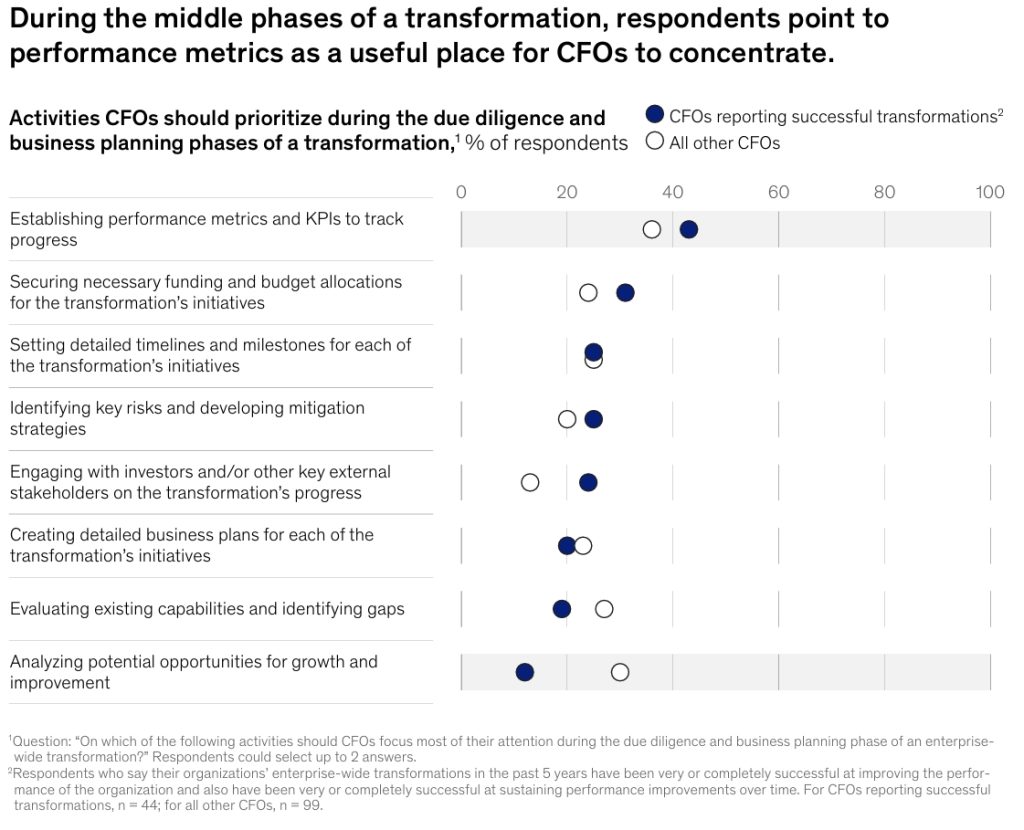
Why It Works: Clear metrics act as the transformation’s compass. They allow CFOs to nimbly shift capital to the best-performing initiatives, preventing the common failure of underfunding winners or funding projects based on misguided projections.
3. Do: Be the Voice for Change Management. Don’t: Get Bogged Down in Implementation.
The Insight: When the rubber meets the road in the implementation phase, the human element takes center stage. The most effective CFOs see their core duty as managing change and addressing resistance. They are the vocal advocates, the aligners of different departments, and the breakers of silos.
The Pitfall: The risk here is becoming a project manager. CFOs from less successful transformations are nearly three times more likely to think leading initiative implementation is a valuable use of their time. This is work that should be delegated to a dedicated transformation office.
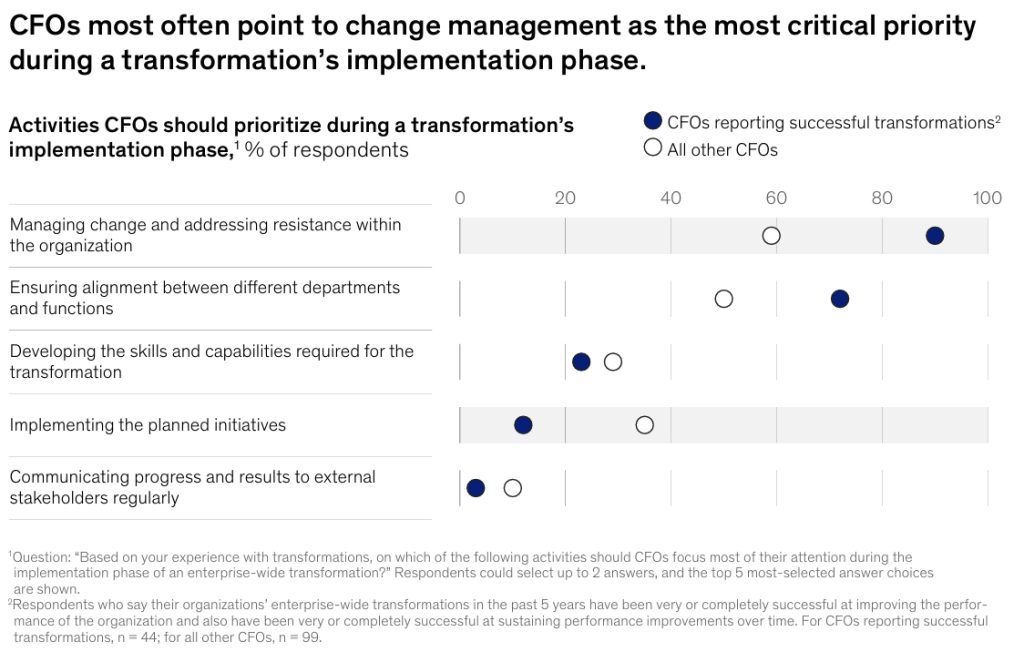
Why It Works: A CFO’s authority and cross-functional view make them uniquely positioned to champion the change. By focusing on communication and alignment, they secure the organizational buy-in that 70% of respondents cited as the biggest challenge to sustained success.
4. Do: Champion Modern Technology Infrastructure. Don’t: Overlook the Accompanying Skills Gaps.
The Insight: Technology is a key enabler, but also a common roadblock. The survey found that a lack of adequate IT infrastructure is a top challenge for struggling transformations—they are twice as likely to cite it as a problem compared to successful ones.
The Pitfall: While advocating for tech, don’t forget the people using it. Successful CFOs frequently pointed to employee skills gaps as the second-most significant challenge to overcome for long-term success.
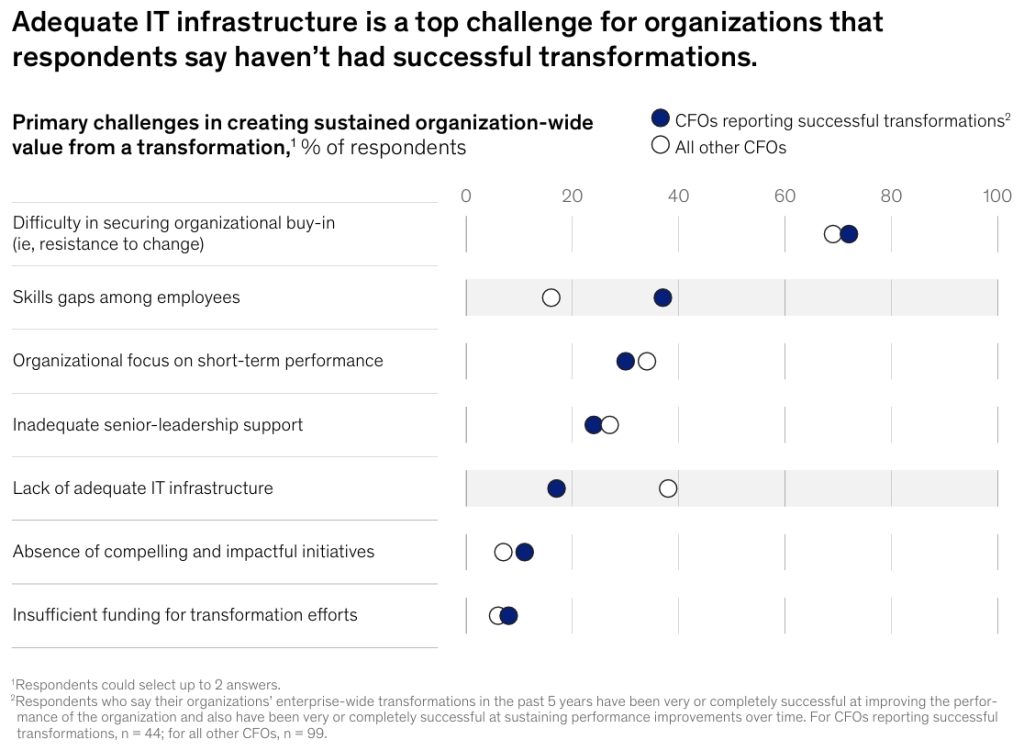
Why It Works: Investing in modern tech creates the platform for efficiency and innovation. But without parallel investment in training and upskilling, that new technology will never reach its potential, leaving your transformation stalled and your workforce frustrated.
The Bottom Line for the Modern CFOs to Lead Successful Transformations
Transformation is difficult; sustaining its gains is even harder. A CFO’s focused attention dramatically improves the odds. The data is clear: move beyond your traditional budget-and-forecast role.
Your blueprint for success is to:
- Build the team before you build the budget.
- Define the metrics that matter and stick to them.
- Champion the change and manage resistance.
- Advocate for tech and training in equal measure.
By adopting this strategic, people-centric approach, you can steer your organization not just through a transformation, but toward a future of resilient and sustained performance.
🔗 Links for More:
Read full report on McKinsey website or NeoForm LinkedIn page.
📌 About NeoForm:
NeoForm Business Partners is a strategic and transformational partner specialized in Financial Transformation through financial efficiency and agility. At NeoForm, we partner with businesses to implement cutting-edge Intelligent Planning solutions that drive smarter decisions and better outcomes.
Visit our blog for more insights on Financial Planning & Analysis (FP&A), Finance Business Partnering & financial transformation.
🔗 Related Readings:
- Finance Transformation 4.0
- 6 Human-centric Levers for Any CFO to Turn Transformations into Success
- Cost Transformation 2025: Beyond Cutting to Strategic Reinvention
- How to Become a 10x Effective CFO: Leading with Strategy, Data, and Execution
- Creating Business Value: A Guide to Finance Business Partnering Transformation
At NeoForm, we partner with finance leaders to build the agile, high-performing teams that make transformation possible. Explore NEO Services and Contact NeoForm today to discuss how we can support your next strategic leap.
1 Comment
Financial Performance Transformation: How CFOs Balance Risk, Innovation & Value - NeoForm Business Partners
[…] 4 Rules for CFOs to Lead Successful Transformations […]